S2 E3: Liquid Gold
S2 E3: Liquid Gold
Zack, the beagle, presents for his annual wellness exam, and labwork is performed, including a CBC, chemistry, and (oh-so-fortunately) urinalysis, as part of his minimum database. Listen in as Jessica and Holly discuss Zack’s unexpected results and the options to provide a definitive diagnosis.
View Transcript
Welcome to Tails from the Lab, where an ever optimistic veterinarian and slightly salty technician entertain listeners with true stories and tall tales revolving around laboratory diagnostics.
Names have been changed to protect the innocent, but the lab work is real.
You can listen on your lunch break, on your commute, or when you’re hiding from your kids in the bathroom.
Each episode, we hope to leave you a little smarter, a little brighter, and feeling more empowered in the lab.
Welcome to today’s tale from the Lab. Liquid gold.
No. Hello, and welcome back. I’m Jessica. And I’m Holly, and this is Tales from the Lab. I had a interesting experience two days ago.
Do tell.
So I. Three dogs. You know, I live in a pretty rural area,
so I’m walking the dogs through this field that I have permission to walk through so I don’t get hit by a car. And, you know, we’re doo to do walking along, and all of a sudden, everybody goes on alert, and I start hearing bird noises.
But you can’t see them.
I can’t see them. So we’re heading up a little hill.
Okay.
So I hear something at the top of the hill, and obviously the dogs are worked up. So now I have, like, the choice is keep going or turn around.
So I decide to keep going. And I crest the hill to a flock of, like, 25 guinea hens. And I’m terrified.
I don’t mind chickens, but guinea hens terrify me. They’re mean.
Really?
Yeah. So they get very upset at all of us. And the dogs are now, like, pulling and crying. And I’ve got three dogs and my. My fear of guinea hens. And they start running towards us like they were going towards.
Towards the dogs and me. So I turn around, I run down the hill with the dogs away from this flock of guinea hens. Now I’m, like, terrified. I don’t know where they came from.
Like, I don’t. I don’t know where they came from. So now I’m terrified to walk through that field. So now every time I get to the bottom of that hill, I just turn around and go home.
I think oftentimes the stories that we share are kind of these sick pets that come in and there’s action and fluids and inflammation.
But I also think on the other side of that spectrum is preventative care, which is equally important. Wellness testing is such an important part of the lab as well. And I think it’s oftentimes overlooked because who would want to do lab work on a healthy pet?
So in this case, we’re going to talk about Zach.
Yeah. And the real value of his preventive lab work.
Correct. Yep. So we’ll start as we do with most of our cases, with a signalment. So zach is a 12 year old male neutered beagle and he came into his family veterinarian for his wellness appointment.
His owners reported that he was doing great at home. No abnormalities since his last appointment where he had actually had a dental cleaning last year.
So these are, I think great owners. They’re committed, you know, they understand the importance of bringing him in for his wellness appointments. He’s had a Dental at 11 years of age.
You know, they’re questioning, is this something that we need to do this year? Veterinarian did her physical examination.
There was some dental tartar, noted lenticular sclerosis and arthritis. So just some older dog changes. And she agreed, the veterinarian agreed that dental would be warranted especially because of that dental tartar.
And in preparation for that,
they sent out a CBC chemistry and a urinalysis to Antec’s reference lab. And I want to highlight the importance of that urinalysis because it’s often the forgotten portion of the minimum database and it is imperative for the interpretation of the CBC and the biochemistry profile as well as giving us all that important information on the upper and lower urinary tract.
Well said. As they get back Zach’s lab work from the reference lab, his CBC comes back without any significant abnormalities. And a little plug as we’re talking about preventive lab work.
Right. Is to make sure we speak to the value of those test results when we’re calling back an owner who just paid potentially hundreds of dollars of lab work. Is to not undervalue it by saying all looks good, looks normal.
Right.
Is to say so in our cbc. Right. Where we evaluate for signs of anemia, signs of inflammation, a stress response, increased glucocorticoid concern, maybe a thrombocytopenia or in an area of high tick borne disease.
Maybe it got a blood film review because of morph. A logic change. There’s so much value in there that they paid for.
Making sure they understand what they’re paying for is so, so important, you know that we didn’t talk about the chemistry yet. But like thing things that they understand, kidney, liver, you know, we don’t want to make it too high level and make people like glaze over.
But yeah, it’s so important to make sure they understand what they’re paying for.
Yeah. That they get that value from that. Right. And it’s an investment in their pet’s health. Right. That they should be proud of. We should celebrate normal results, the healthy results.
And it sets a stage for why we’re going to repeat diagnostics in times of illness.
And for the technicians that are listening, this is a great place for you to kind of slide in and help your doctors. You know, doctors empower your technicians to be able to go into the room with owners, because oftentimes, at least the way that our hospital works, you know, the technicians are going in and going over the discharge instructions,
and the lab work is part of that. Empower them to feel like they can have these conversations with the. With the owners, you know, especially when the lab work is normal.
So we get back the CBC results, and as I said, no significant abnormalities in the biochemical profile. There was a mild elevation in the alkyne phosphatase, but it was only mild.
They had actually seen it previously for him, and it was not considered of clinical concern.
And then they get back the urinalysis. Right. And so Zach had not been demonstrating any dysuria that the owner had appreciated at home, any abnormalities. But there was inflammation noted.
There was increased red cells and white cells. And more concerningly, there was atypia noted in the epithelial cells. So noted by the technologist. Right. At Antique Reference Lab that then created a flag that elevated that urine sediment review to the level of pathologist.
Right. So a board certified clinical pathologist does that review and made comments. In summary, there are atypical epithelial cells that raise concern for underlying urothelial or transitional cell carcinoma. So this suspected or concern for underlying eothelial carcinoma came as a total surprise.
Right. To the veterinarian, to the owner,
and of course she was concerned. Right. No clinical signs reported at home, but they referred her for further workup. That’s how we got to know Zach and Zach’s mom.
So they come in referral.
At the referral appointment, they imaged the bladder on ultrasound. They did see moderate thickening of the bladder wall, but there was no discernible masses. We also have images from the prostate gland.
And then there is where we do things get a little more interesting. So there was a mixed echogenicity within the prostate gland on ultrasound that had this central hyperechoic focus that they thought might be mineralization.
Right. Which is really unusual to see in a neutered male dog, especially one that was neutered before sexual maturity, which he was neutered at a young age and really concerning for underlying carcinoma.
So consistent with the epithelial atypia that was seen at the reference lab on the urine.
And I’ll put pop up pictures of his bladder and also his. The prostatic mineralization on Instagram.
And so every practice, I think, might handle this differently. Right. At this stage. Right. So we have now two worrisome changes for underlying carcinoma. But how do we get that definitive diagnosis?
Right. In this case, at our hospital, it was common practice for. For our veterinarian, who most commonly sees these referral appointments to perform a fine needle aspiration to get a cytologic sample for a definitive diagnosis of suspected urothelial carcinomas.
Now, that takes talent in imaging,
talent and training experience in actually getting that needle directly into the sample. Right.
Well prepared slides.
As a clinical pathologist there on staff, I’m able to look at those. Right. And. And it does help in those instances that that needle is inserted into the middle of the mass effect or the irregular tissue.
So that when I see that cytologic preparation, it is not confounded by a lot of what would be surface inflammation, bacteria, et cetera, that’s seen on the urine cytology. Right.
So it helps me to make a more confident diagnosis. Right. Of urothelial carcinoma, which it was in this case. But I hazard to say in the majority of other practices,
one of those key factors is not there to give them the confidence or willingness to aspirate, especially because there is risk of potentially seeding the track. Right. With neoplastic cells.
Yeah. So there are some risks associated with cytology,
and like you said, there are limitations, especially sometimes these urine samples also have inflammation. So the gold standard for diagnosis of urothelial carcinoma is histopathology, which requires a biopsy of the mass, which is an invasive procedure.
It requires you to have specialized equipment and training,
also expensive for the owners, and in Zach’s case, potentially causing a patient that’s not experiencing any signs to then have those things occur because of the procedure.
So there has been some research that shows 80 to 85% of canine urothelial carcinomas share a specific mutation in a gene named B. RAF this mutation leads to uncontrolled cell growth, which makes sense, you know, with cancer, we’ve got uncontrolled cell growth.
And this mutation is specific enough that we can use it as a marker for urothelial carcinomas. There’s a test called cadep raf it’s offered at the NTAC reference lab.
And as far as Tesco, it’s. It’s actually a Pretty easy collection. It really is just urine samples. And we want free catch because we want to make sure that we’re getting the entire urinary tract involved.
So if we just do a cysto, we, we miss part of that,
especially as it goes past the urethra.
So we want to make sure we’re getting free catches and we need about 40mls of urine, which sounds like a lot, but like I said, we can pull those samples.
You saying pool?
Pool. Pulled. Pull. Pulled, pulled. We can put those samples together.
We can take multiple samples throughout a two to three day period and pour them into the same container as long as it’s protected from light.
Urine is collected and then transferred within 15 minutes into the special urine collection cup supplied by Antech that has a special preservative in it. Okay. So that PCR test is going to be very sensitive and specific for that BRAF mutation.
That BRAF mutation, however, is only present in up to 85% of eothelial carcinomas. If the Cadet BRAF test is negative, if they do not find the braf, the mutation in the BRAF gene,
there’s the opportunity. If the sample is cellular enough, it’ll be reflexed to the BRAF plus test. And that looks for a copy number mutation that is present in another subset of these urothelial carcinomas that are testing BRAF negative.
This increases the sensitivity of that cadet BRAF test.
So we are really lucky now to have a very sensitive and specific test for urotheolar carcinoma off of these free CATCH samples. Right. And in Zach’s case would’ve been a great option that facilitates this early diagnosis, confirmatory diagnosis of endothelial carcinoma that in his case allowed for much earlier intervention before he showed clinical signs and that that earlier treatment likely led to a prolonged quality of life.
So Zach did start chemotherapy. He remained asymptomatic per mom for a long time. His early diagnosis or his diagnosis in the absence of clinical signs before it crossed that clinical threshold, you know, really allowed him to have longer, healthier days.
Correct. So I guess we should do our take homes.
Let’s do our take homes.
So wellness testing is important. We want to be doing testing not just in sickness, but also in health.
Do not forget to include urine in that wellness testing or any testing.
Cadet BRAF can provide a non invasive confirmatory diagnosis. In the cases that we’re worried about for urothelial carcinoma.
I do have to say it’s not a take home. But in our last episode we talked about our friend Deirdre being our first fan.
Rachel, we hear you and someday we’ll answer your questions.
Thank you for listening.
Please like and subscribe to stay informed about new episodes soon to be released.
Images, lab work, and other tidbits from today’s case will be posted on our website at www.antecdiagnostics.com talesfromthelab and on Antech.
Diagnostics Instagram, or you can even search for antechlab.
You can email any feedback, questions or requests for Future content to talesfromthelabanttechmail.com thanks.
Again for your support.
Tales from the Lab is a production of Antec Diagnostics. The intent of this podcast is to provide education and guidance with the understanding that any diagnostic testing and treatment decisions are ultimately at the discretion of the attending veterinarian within the established veterinarian patient client relationship.
Disclaimer: This podcast intends to provide education and guidance with the understanding that any diagnostic testing and treatment decisions are ultimately at the discretion of the attending veterinarian within the established veterinarian-patient-client relationship.
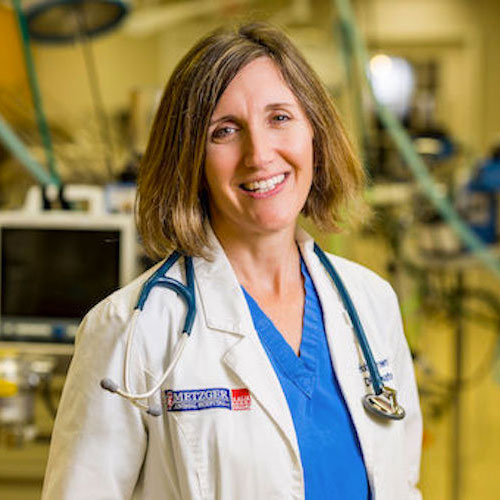
Holly Brown, DVM, PhD, DACVP
Holly is a veterinarian, board-certified clinical pathologist, and figurative hand-holder. She practiced small animal medicine before, during, and after her specialty training — grateful to have combined her love of clinical practice and the laboratory diagnostics that support it. Holly remains in the trenches at a general, referral, and emergency practice. She loves making an impact at the interface of laboratory data and patient care. Holly recently transitioned into her new role as Chief Veterinary Educator for Antech Diagnostics — exercising her passion for delivering education about maximizing diagnostic testing. When away from the office, she enjoys traveling with her family, snuggling her sugar-sweet bird dog and tripod cat, and dreaming of home renovations that rarely come to fruition.
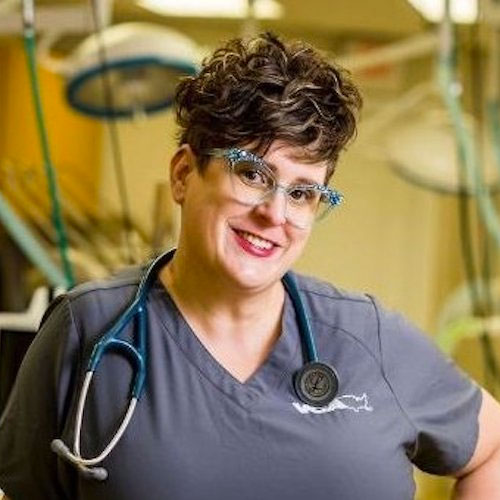
Jessica Wilson-Hess, MS, CVT, VTS
(SAIM)
Jessica is a certified veterinary technician, a veterinary technician specialist (VTS) in small animal internal medicine, and a confirmed nerd. She loves all things veterinary medicine — clinical pathology, nutrition, and caring for critically ill patients (the more IV pumps, the better). Jessica has over 15 years of technician experience. She currently works as a Clinical Evaluation and Education Specialist for Antech Diagnostics. Jessica is passionate about educating technicians and nurses about in-clinic diagnostics, advanced nursing skills, and medical case management. When she isn’t nerding it up at work, she is snuggling her pug, Tank, throwing the frisbee for Ruger, her black Labrador retriever, knitting, talking to her chickens about the meaning of life, and quilting.