Allercept™ Allergy Testing and Immunotherapy for Dogs, Cats & Horses with Atopic Dermatitis
Allergy Testing and Immunotherapy Treatment Program

What is Allercept™ ?
Allercept is an allergen testing and immunotherapy service designed to help identify and support clinical management of allergies in canine, feline, and equine patients with atopic dermatitis.
Allergen-specific immunotherapy is recognized by the World Association of Veterinary Dermatologists and the International Committee on Allergic Diseases of Animals (ICADA) as one of the only methods to address atopic dermatitis and help offer long-term relief to improve quality of life for patients and their owners.1, 2
How Allercept™ Allergy Testing Works
Allercept serum allergen assessment measures the level of IgE antibodies to individual allergens within the blood:
- Each patient receives a comprehensive test that includes a broad range of allergens.
- Patented IgE receptor technology delivers high specificity and ultra-sensitive detection down to 10 pg/mL.
- All test results are reviewed and validated by our veterinary credentialed Specialty Products Technical Support team with over 100 years of combined experience in veterinary dermatology and allergen-specific immunotherapy.
Personalized Immunotherapy Solutions
Allercept’s highly sensitive and specific serum IgE testing produces individualized immunotherapy recommendations to inform treatment decisions for each patient.
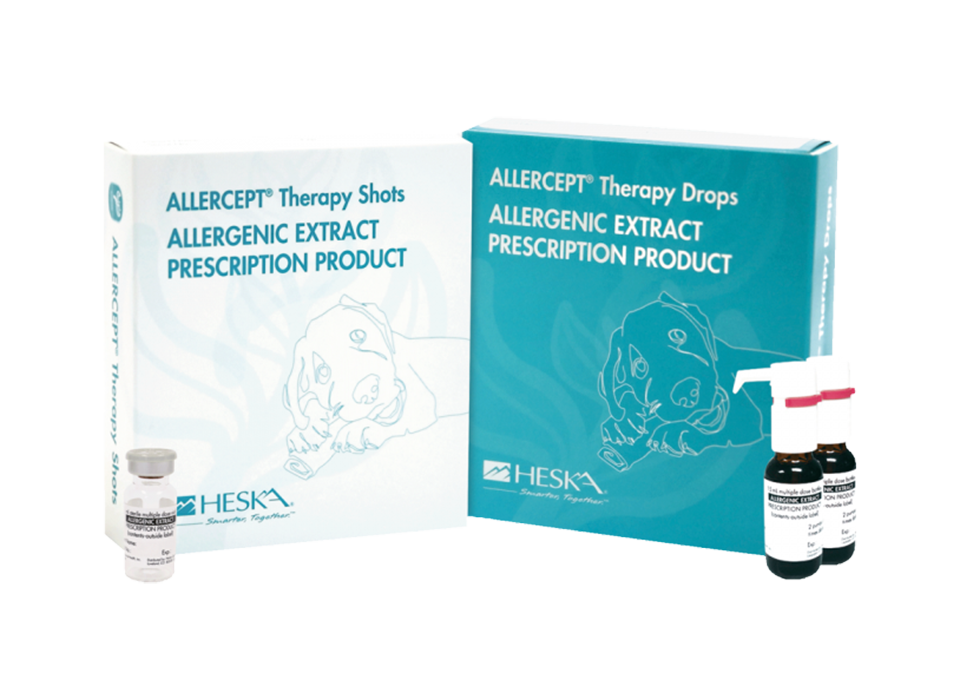
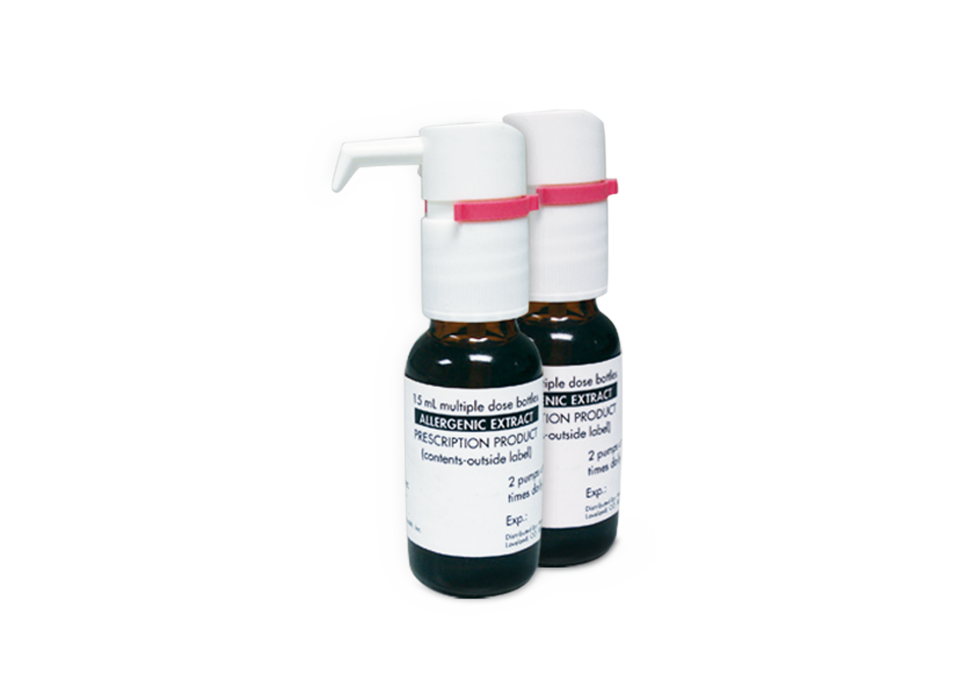
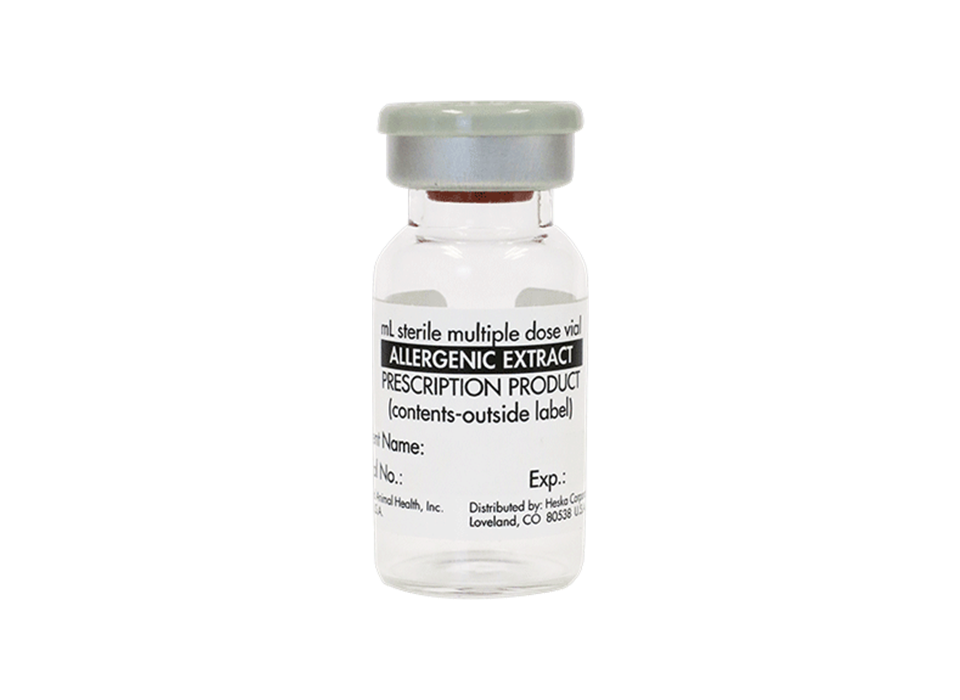
From there, you can work with your patients’ owners to choose the most convenient administration method: subcutaneous shots given weekly (often gradually reduced to monthly shots) or twice daily sublingual drops.
-

Allercept™ Testing
The most sensitive and specific serum allergy assessment in the industry.
-

Allercept™ Therapy Drops
Long-term immunotherapy-based allergy relief for dogs, cats, and horses, delivered under the tongue.
-

Allercept™ Therapy Shots
Long-term immunotherapy-based allergy relief for dogs, cats, and horses.
“Jethro battled skin infections for years. He was brought in for euthanasia and ultimately surrendered to our practice because of his ongoing skin infections. Allercept allergy test and sublingual immunotherapy drops have put him on the road to recovery. Treatment is easy and Jethro’s quality of life has greatly improved. After six months of treatment his coat is growing back beautifully—he hasn’t had a skin infection in months! There are so many pets that can benefit from Allercept allergy testing and immunotherapy!”
— Lauren Hubbard, Technician & Jethro’s Mom, Surrey Veterinary Clinic, Clare, MI
“With a 60–70% good-to-excellent response rate [in atopic patients], proven long-term safety, the ability to use [fewer] medications with potential adverse side effects, and the potential to limit the pathogenesis and progression of the disease, why wouldn’t veterinarians offer immunotherapy to the owner for their atopic dog?!”
—Alice Jeromin, RPH, DVM, Diplomate, ACVD
Allercept™ Frequently Asked Questions (FAQ)
The Allercept serum allergy assessment measures the level of IgE antibodies to individual allergens. IgE antibodies are a measure of the allergic individual’s abnormal immune response to individual allergens.
Serum IgE assessment measures allergic response (IgE antibodies) at the blood level, while intradermal assessment measures allergic response at the skin level by evaluating the wheal-and-flare reaction triggered by mast cell degranulation and the release of inflammatory mediators. A serum assessment is a less invasive test, involving only a simple blood draw.
Allercept offers a patented IgE-specific testing methodology, individually reviewed custom immunotherapy recommendations, and a dedicated customer support team with complimentary case consultations.
Allercept uses a universal environmental allergen panel for dogs, cats and horses so every patient receives a comprehensive test including a broad range of allergens. The included custom immunotherapy recommendations are then based on patient history, geographic location, and cross-reactivity of allergens, among other factors.
Ideally, testing should be done during or within two months of peak clinical signs. Patients should be at least two years old, have displayed clinical signs for at least one year, and have lived in the same region for at least one year.
Published studies reveal that allergen-specific immunotherapy (ASIT) has shown to reduce the need for allergy medications in dogs, cats, and horses.4 5 6 According to the same studies, it can still be beneficial to continue medications to reduce pruritus during the early stages of treatments and during allergic flares.
Patients typically respond to immunotherapy within four to six months of starting, with best results achieved after 10-12 months. Patients should stay on allergen-specific immunotherapy for at least one year before determining their response.
Yes! Dog owners have reported a significantly improved quality of life for both them and their dog with allergen-specific immunotherapy.7
Owners of dogs treated with allergen-specific immunotherapy report they were able to significantly reduce their overall expenses (fewer visits to your veterinarian, less systemic medications, etc.) compared to owners of dogs not treated with allergen-specific immunotherapy.8
Published studies of allergen-specific immunotherapy report 50% reduction in clinical signs.9 Studies report:
- Cats – 60%-78% success rate10
- Dogs – 60% success rate11, 12
- Horses – 50-84% success rates13, 14
Clinical outcomes vary based on patient factors, allergen exposure, and treatment adherence. Published response rates reflect allergen‑specific immunotherapy outcomes generally and do not guarantee results for any individual patient.
Allercept is a veterinary allergy assessment service and is not a pharmaceutical drug. All treatment decisions are made by licensed veterinarians. Clinical outcomes vary and are not guaranteed.
- Olivry T, DeBoer DJ, Favrot C, et al. Treatment of canine atopic dermatitis: 2015 updated guidelines from the International Committee on Allergic Diseases of Animals (ICADA). BMC Vet Res. 2015;11(1):1–15.
- Olivry T, DeBoer DJ, Favrot C, et al. Treatment of canine atopic dermatitis: 2015 updated guidelines from the International Committee on Allergic Diseases of Animals (ICADA). BMC Vet Res. 2015;11(1):1–15. https://onlinelibrary.wiley.com/doi/10.1111/all.13464
- Mueller RS, Jensen-Jarolim E, Roth-Walter F, et al. Allergen immunotherapy in people, dogs, cats and horses – differences, similarities and research needs. Allergy. 2018;73:1989–1999. https://doi.org/10.1111/all.13464
- Ramió-Lluch L, Brazís P, Ferrer L, Puigdemont A. Allergen-specific immunotherapy in dogs with atopic dermatitis: is owner compliance the main success-limiting factor? Vet Rec. 2020;187(12).
- Brément T, Bensignor E, Drevon-Gaillot EV, Sanchez M-D, Pariente S, Viaud S. A retrospective, multicentric controlled study of the effect of specific allergen immunotherapy on medication needs in cats with atopic skin syndrome. Vet Dermatol. 2025; 36: 332–342. https://doi.org/10.1111/vde.13333.
- Stepnik, Casey T. and Outerbridge, Catherine A. and White, Stephen D. and Kass, Philip H., Equine atopic skin disease and response to allergen-specific immunotherapy: a retrospective study at the University of California-Davis (1991–2008), Veterinary Dermatology, Vol 23,
- Kotnik, T. Quality of Life of Allergic Dogs Treated with Allergen-Specific Immunotherapy —A Retrospective Study. Vet. Sci. 2023, 10, 72.
- Olivry T, DeBoer DJ, Favrot C, et al. Treatment of canine atopic dermatitis: 2015 updated guidelines from the International Committee on Allergic Diseases of Animals (ICADA). BMC Vet Res. 2015;11(1):1–15.
- Ann M. Trimmer, Craig E. Griffin, Wayne S. Rosenkrantz, Feline Immunotherapy, Clinical Techniques in Small Animal Practice, Volume 21, Issue 3, 2006, Pages 157-161.
- DeBoer D, Morris M. Multicentre open trial demonstrates efficacy of sublingual immunotherapy in canine atopic dermatitis (abstract). Vet Dermatol 2012;23(Suppl 1):65.
- Fennis EE, van Damme CM, Schlotter YM, et al. Efficacy of subcutaneous allergen immunotherapy in atopic dogs: a retrospective study of 664cases. Vet Dermatol. 2022;33(4):321–e75
- Mueller, R.S.; Jensen-Jarolim, E.; Roth-Walter, F.; Marti, E.; Janda, J.; Seida, A.A.; DeBoer, D. Allergen Immunotherapy in People, Dogs, Cats and Horses—Differences, Similarities and Research Needs. Allergy 2018, 73, 1989–1999.
- Marsella R, White S, Fadok VA, Wilson D, Mueller R, Outerbridge C, et al. Equine allergic skin diseases: Clinical consensus guidelines of the World Association for Veterinary Dermatology. Vet Dermatol. 2023; 34: 175–208.
Have questions about Allercept™?
Complete the form and an Antech representative will reach out to you. Or email us at [email protected]