Diagnosing Snickers’ Belly Full of Trouble
Signalment
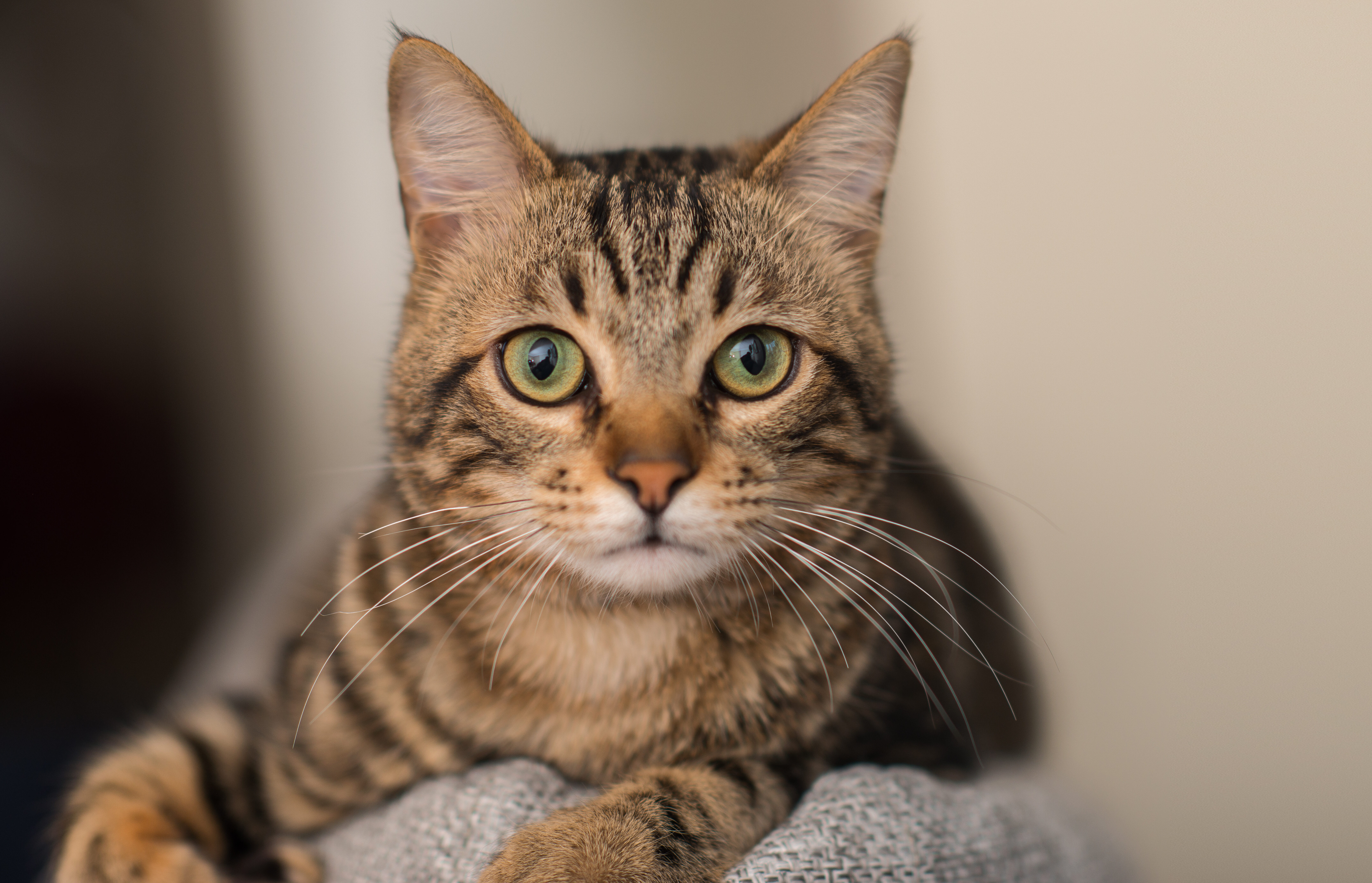
Snickers: 13-year-old male neutered Domestic Shorthair cat
Background: Snickers arrives sick at the hospital with elevated liver enzymes
Author: Holly Brown (DVM, PhD, DACVP)
Overview
Snickers’ initial bloodwork shows elevated liver enzymes. The subsequent abdominal ultrasound identifies ascites, and the ensuing fluid analysis provides key diagnostic information to help define Snickers’ disease process.
Case Details and History
Snickers had been seen by his referring veterinarian (rDVM) a month prior when he began showing signs of intermittent inappetence. He had also just been hospitalized for several days. The rDVM had sent him home with antibiotics and an anti-vomiting medication, but Snickers still wasn’t eating. Snickers’ owners wanted a second opinion, and he presented at the hospital very sick.
Physical Exam
Snickers’ physical exam showed muscle wasting and a fluid wave in his abdomen.
Diagnostic Proces
- Snickers’ CBC performed on the Element HT5+™ hematology analyzer revealed a marginal anemia, with the young red blood cells, or reticulocytes, at the low end of the reference interval, consistent with a non-regenerative anemia. The most common reason for non-regenerative anemia is that it’s secondary to other chronic or inflammatory disease.
- In Snickers’ case, there was an inflammatory leukogram, with increased white blood cells characterized by a neutrophilia with the presence of bands and a monocytosis in support of tissue destruction.
- The lymphocytes and eosinophils were at the low end of the reference interval, most likely because of increased glucocorticoids, or a stress leukogram, superimposed on the inflammatory leukogram.
- In the chemistry panel performed on the Element DC5X™, the most significant changes observed were in the liver values.
- Finding: Snickers’ ALT (alanine aminotransferase) was twice the high end of the reference interval. ALT is a measurement of enzyme activity that is highest within hepatocytes (liver cells), and an increased value in the blood indicates damage to hepatocytes with subsequent leakage from the cells. So, with Snickers, the significant elevation suggested some destructive process occurring in his liver.
- ALP (alkaline phosphatase), an inducible enzyme found in the liver and other tissues, was within the reference interval, but GGT (gamma-glutamyl transferase) was increased. GGT comes from the biliary epithelial cells and is also an inducible enzyme, such that its increase is commonly attributed to crowding or irritation of biliary cells when there is decreased bile flow, or cholestasis.
- Snickers’ bilirubin was also increased which, in the absence of hemolysis, supports liver dysfunction.
At this point, the team knew Snickers had significant disease — with inflammation, tissue destruction, and liver and biliary tree involvement. The concurrent ascites could have been anything from pancreatitis to a septic abdomen, heart failure to a liver mass, and several things in between. Further investigation was needed.
Diagnostics Round Two
- SThe next step was to conduct a fluid analysis of the ascites.
- Fluid collected into an EDTA anticoagulated purple top, and from that a direct smear was made as well as protein determination via refractometer.
- Finding: Microscopic review of the stained smear of the fluid revealed increased nucleated cells, and the total protein measurement was 5.8 g/dL. The high cell count and high protein level were consistent with an exudative effusion.
- The nucleated cells included a mixture of neutrophils with fewer large mononuclear cells, including macrophages with phagocytosed pigmented material. Additionally, light grey-blue extracellular material was noted in the background, interpreted to be mucin, or “white bile”.
- To further investigate the possibility for bile peritonitis, ascites fluid collected into a non-additive white-top tube was run through the chemistry analyzer to measure total bilirubin levels in the effusion.
- The total bilirubin measurement in the fluid was 32.2 mg/dL compared to 4.2 mg/dL in the blood.
Diagnosis
The markedly elevated bilirubin level in the effusion as compared to the blood supported a breach of the biliary tree. Together with the prominent inflammation in the fluid and the presence of mucinous material, findings confirmed the diagnosis of bile peritonitis.
Case Impact
Snickers’ case highlights the important diagnostic tests used to confirm the diagnosis of bile peritonitis. The CBC results identified significant inflammatory disease. The elevated liver enzyme on the chemistry panel pointed to the liver as a source of tissue pathology, with the significantly elevated GGT supporting involvement specifically of the biliary tree. The effusion analysis identified inflammation with a markedly elevated bilirubin level compared to that of the blood, providing a confident diagnosis of bile peritonitis.
Listen to the full episode here.