Vector-Borne Disease Updates: Which Ones to Watch For & How to Test?

By Michelle Evason, BSc, DVM, DACVIM (SAIM), MRCVS
Director, Veterinary Education & Outreach at Antech
Veterinarians in the U.S. and Canada are seeing more ticks and more pets with tick-borne infections, including in regions (and seasons!) where these problems were previously uncommon.
Similarly, diseases like Chagas (caused by transmission of Trypanosoma cruzi from kissing bug vectors to dogs or humans) and cytauxzoonosis are moving out of areas we used to think of as focal hotspots, like Texas and Tennessee respectively. Recent reports indicate emergence in new states and regions, such as Chagas in California and Maryland, and cytauxzoonosis in cats from Indiana.[i][ii]
Tick and Vector Expansion Affects Humans, Too
Unsurprisingly, with more ticks and other vectors emerging and expanding their ranges, human VBD infections have been trending up too. The Center for Disease Control and Prevention (CDC) reports that diagnosis in humans has increased significantly in the U.S., with more than a million VBD cases between 2001 and 2023, and annual reported cases more than doubling during this timeframe.
In dogs, heartworm, Lyme borreliosis, anaplasmosis, and ehrlichiosis remain the most commonly diagnosed VBDs. However, increased numbers and geographical spread of ticks that vector these VBDs, and others like Rocky Mountain Spotted Fever (RMSF, Rickettsia Spotted Fever group), babesiosis, cytauxzoonosis, along with other vectors such as kissing bugs and fleas that transmit other dog and cat diseases, demands expanded options for timely testing.
Contextualized Diagnostic Options for VBDs
Veterinarians have had to rapidly evolve how to best detect, diagnose, and treat infectious diseases due to current vector emergence and expansion. It has been exciting to be part of the research behind the options Antech™ now offers for VBD testing. And not only that—these test options are supported with education, such as clinical decision-making algorithms, that step practitioners through in-the-moment decision-making on which tests to run, why, and what treatment and prevention strategies to use, along with assisting pet owner communication and One Health.
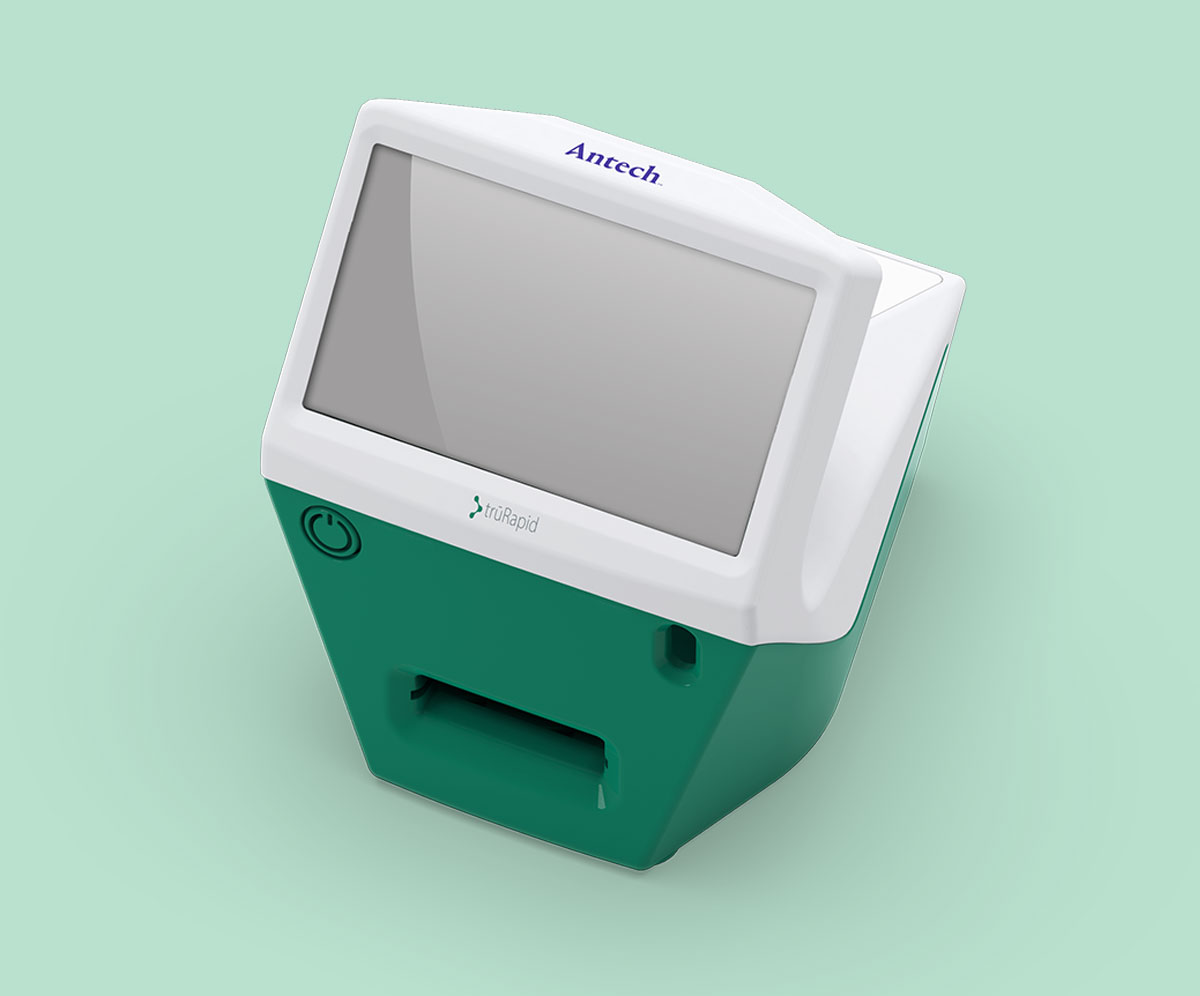
Whether it’s the Accuplex™ and trūRapid™ Four screening test options for identifying heartworm antigen, and exposure to tick-borne pathogens, like Anaplasma spp., Ehrlichia spp., and B. burgdorferi, or a molecular diagnostic for acute disease detection, and confirming the presence of genetic material in a dog or cat, like the new Vector-Borne Disease PCR (polymerase chain reaction) Panel. Antech’s contextualized diagnostic options empower veterinary teams, guide treatment, and support antimicrobial stewardship.
Antibody vs. PCR Testing: What to choose?
In veterinary medicine, we’ve historically used antibody (serology testing) to look for infectious disease, and these tests play an important role in screening for an immune response to an infectious agent. The presence of a positive serology test result on Accuplex™, or the in-house test option trūRapid™ FOUR, confirms a dog has been exposed to the bacteria (through bite from a tick vector) that can cause Lyme disease, anaplasmosis, and ehrlichiosis. While it’s important to recognize that most dogs and cats exposed to VBD pathogens do not develop clinical disease, screening provides the valuable opportunity to inform conversations on prevention and cheer compliance when negative.
In acutely ill pets when VBD is suspected, PCR is often the better test choice, because antibody production by the body lags behind infection for many infectious disease agents, and consequently serology testing may still be negative. Since PCR detects genetic material if an infectious agent is present, this test confirms active infection. Because of this, for many VBDs, like anaplasmosis or ehrlichiosis, PCR is the preferred test to detect infection, and broad panel testing, like Antech’s VBD PCR panel, helps clarify complex cases, identify co-infections, and enables veterinarians to target appropriate treatment in dogs and cats that frequently present with vague clinical signs and laboratory changes, like low platelets.
The Most Comprehensive PCR Panels in the Industry
Antech’s enhanced Vector-Borne Disease PCR Panels have undergone performance evaluation and head-to-head comparison with the PCR test currently considered “gold standard”. Additionally, the Vector-Borne Disease PCR Panel detects a broader range of pathogens than available commercial offerings and also includes an indicator of potential antimicrobial resistance to atovaquone to assist targeted treatment.
We know a lot about how this test works, and we’ve done the research. This year, in concert with bringing the Vector-Borne Disease PCR Panels to market for veterinarians, two research abstract studies about the panels were submitted, accepted, and presented at the 2025 ACVIM Forum. Similarly, numerous abstracts on Antech’s other VBD offerings, Accuplex™ and trūRapid™ FOUR, were also presented at ACVIM (listed at the article’s end for further reading).
Antech’s T960 and T965 Vector-Borne Disease PCR Panels allow veterinarians to diagnose VBDs that can impact dogs and cats while informing treatment choices that support antimicrobial stewardship. In addition to testing for the more common VBD pathogens, this comprehensive panel includes emerging pathogens like Chagas (Trypanosoma), Cytauxzoon, Hepatozoon, Leishmania, and Rickettsia Spotted Fever Group (RMSF), among others like the feline hemoparasites, and Babesia. The inclusion of the atovaquone resistance marker also addresses antimicrobial resistance, a growing concern in the treatment of Babesia and Cytauxzoon infections and is exclusively available on the Antech Vector-Borne Disease PCR panels.
Tests to Help Vets Now
As cases of vector-borne disease, and test-positive results, continue to rise in both endemic and emerging regions, veterinary professionals have a responsibility to provide care that considers One Health—the interconnectedness of human, animal, and environmental health.
Antech is committed to supporting veterinarians in both testing and supporting care for dogs and cats exposed to these serious diseases- and serving as disease sentinels for their human caregivers. Antech’s VBD test options (Accuplex™, trūRapid™ FOUR, and the Antech VBD PCR panels) provide the broadest range of infectious disease testing options on the market today — exactly what our profession, and our pet patients, need right now.
Looking for more information on Antech’s vector-borne disease testing solutions? Visit our VBD page here or speak with your Antech representative.
ACVIM Abstracts 2025: Accuplex, trūRapid FOUR, and VBD PCR Panel
- Performance of a Silicon Surface Multiplex Immunoassay for Anaplasma spp. Antibody Detection in Dogs, Bilbrough G, et al. ACVIM 2025
- Performance of a Proprietary Silicon Surface Multiplex Immunoassay for Ehrlichia spp. Antibody Detection in Dogs, Bilbrough G, et al. ACVIM 2025
- Field Validation of Anaplasma spp. and Ehrlichia spp. Antibody Screening Tests in Dogs, Sokolchik I, et al. ACVIM 2025
- Validation of an In-House Diagnostic Screening Test for Anaplasma and Ehrlichia spp. Antibodies in Dogs, Lamichlane C, et al. ACVIM 2025
- Validation of an In-House Diagnostic Screening Test for Borrelia burgdorferi antibodies in naturally exposed dogs, Lamichlane C, et al. ACVIM 2025
- Comparative Evaluation of Canine Vector-Borne Disease Pathogen PCR Panels. Leutenegger CM, et al. ACVIM 2025
- Atovaquone Resistance M121I Polymorphism in Babesia gibsoni Isolates from Dogs, Leutenegger CM, et al. ACVIM 2025
[i] Gavic EA, Achen SE, Fox PR, Benjamin EJ, Goodwin J, Gunasekaran T, Schober KE, Tjostheim SS, Vickers J, Ward JL, Russell DS, Rishniw M, Hamer SA, Saunders AB. Trypanosoma cruzi infection diagnosed in dogs in nonendemic areas and results from a survey suggest a need for increased Chagas disease awareness in North America. J Am Vet Med Assoc. 2023 Feb 2;261(5):705-712
[ii] Reichard MV, Cotey SR, Dangoudoubiyam S, Weerarathne P, Tussey K, Wilkes RP, Miller CA, Mehringer L, Burcham GN. Cytauxzoonosis in Indiana, USA: a case series of cats infected with Cytauxzoon felis (2018-2022). J Feline Med Surg. 2024 May;26(5).