S1 E7: Viper’s Key to Success
S1 E7: Viper’s Key to Success
Viper, the sometimes sweet / sometimes sour 1-year-old Bengal, suffered with recurrent diarrhea for months. After numerous hospital visits, a myriad of diagnostic tests, a variety of medications, and a poor quality of life for both Viper and his mom, we finally discover Viper’s key to success.
View Transcript
Welcome to Tales from the Lab, where.
An ever optimistic veterinarian and slightly salty.
Technician entertain listeners with true stories and tall tales revolving around laboratory diagnostics.
Names have been changed to protect the innocent, but the lab work is real.
You can listen on your lunch break.
On your commute, or when you’re hiding.
From your kids in the bathroom.
Each episode we hope to leave you a little smarter, a little brighter, and feeling more empowered in the lab.
Welcome to today’s tale from the lab. Viper’s key to success.
Hi, we’re back.
We are back. I’m Jessica.
I’m Holly.
Welcome to Tales from the Lab. It’s been a minute for us for recording, but we are back in the recording booth.
Yeah, A new booth for us. Right. We were displaced.
Yes.
Temporarily displaced because of construction. And we found ourselves like a legitimate podcast recording booth.
It’s kind of the size of a telephone booth.
We’re squeezed in here.
We are very squeezed.
It’s a good thing we don’t have a guest today.
Yeah. It’s a little hot too.
And that’s when the door cracked.
Yeah.
But we’re excited.
Yeah, we are very excited.
Especially because today’s case is personal.
Yeah. So it’s kind of fun that we get to talk about this case because his. The pet in this case, his mom, Fiona, is one of the technicians at the animal hospital.
So we are actually able to share his picture. We’re able to, like, say his real name. We don’t have to hide who he is. So that’s kind of a little bit different than what we normally do.
And Fiona is happy to have us share this case with you guys because of how well things turned out.
This is a real success story and a learning opportunity for our whole staff.
Yeah. So we’re going to talk about Viper today. A one year old intact male Bengal cat.
I don’t know. We’ve talked about this in previous episodes, but there is that thing like, be careful what you name your animal.
Right.
Yeah. So did she name him Viper before we knew about his attitude in the hospital, or did he earn that name?
I think she gave him that name and then.
Serves her right. Yeah. All of us.
Right. Yeah.
Because he has lived true to that in the hospital setting.
Yeah.
He’s super duper sweet until you have to restrain him and then he is freakishly strong.
It’s very difficult to get blood work on him and it doesn’t matter. Minimal restraint, fear free gabapentin. None of that seems to make a difference for his blood draws.
So Viper was Picked up from the breeder and came right to our animal hospital for a physical exam. I think everything was healthy on physical exam.
And then they planned to neuter him before she brought him home.
Right.
So we were going to run some pre anesthetic blood work. So while he was only a year old.
Right.
There’s still a lot of value, of course, in running lab work.
Right.
For multiple reasons. You know, he’s, he’s a purebred cat and purebred animals get unique things.
Right.
And we have no baseline data on him.
Right.
So this is our first opportunity to get some lab work. This is a pet she will have through the rest of his life. It will receive a lot of veterinary care.
It will have other lab work done. And what an opportunity to get a baseline to understand what the reference intervals are for him in apparent health.
Yeah, I think that’s so such a really good point because, you know, we use reference intervals generated by whatever the diagnostic company is. And so as someone who’s participated in collecting data for those types of studies, we sample pets from across the United States that are healthy, deemed healthy by their veterinarian through a physical exam.
And then we kind of compile all of those. Think of like the bell shaped curve. Like everybody’s kind. The vast majority of the population is in the middle, but then you have kind of these tails that are the outliers.
And so without doing yearly blood work when they’re healthy, we don’t know what their normal is.
Right. And those reference intervals are often really wide. Right. That keep us from more sensitively detecting abnormalities. Because your hematocrit can drop 20%. And if you start at the high end of the reference interval, you’re still in the reference interval.
And that’s like a significant drop in your red blood cells.
Correct. So I think it’s super important, especially in our younger animals, to not push lab work off until they’re sick. We need those baselines so that we can compare for the inevitable for when they come in sick, when they have gastroenteritis or pancreatitis or, you know, maybe we don’t know what they have,
but if we don’t have a baseline, there’s nothing to compare to.
So he gets pre anesthetic blood work, and so because of his behavior, they waited till he was premedicated for surgery to attempt another blood draw. Is that correct? Yes. Okay. So when we look at his lab work from less blood draw.
Right.
We see some changes on that. Subtle changes on that first day. Yeah. So we start with his cbc. So we’re going to look at a CBC and a chemistry on him.
Right.
With the idea being that in a CBC we can look for any signs of anemia, we can look for signs of inflammation, we can make sure he has adequate platelets. Right.
As he’s going to surgery. And then we’re going to balance that with a chemistry that’s going to look at organ function, which is really important, again, to establish a baseline for him, because we don’t know, but also to understand how lahanda anesthesia and the drug protocols we’re going to come up with.
So as we look at his cbc, he has no anemia.
Right.
And no significant changes in his erythrogram, in the leukogram. It is interesting that he does have a leukocytosis, a mild leukocytosis characterized by a fairly mature neutrophilia and a mild monocytosis, like so a little bit of an inflammatory leukogram.
Now, I think they move forward with a neuter maybe thinking that in some way his stress may have contributed to these numbers. It’s not a stress response or an epinephrine response.
Right.
But I have a feeling that might have been dismissed. They’re only mild increases.
And he had been so challenging to manage. And he appeared healthy on physical exam. Right. And maybe it’s something they plan to just follow up on. Right. Because I don’t remember those early conversations.
So chemistry looks great. There is a mild increase in his globulins and with normal albumin.
Right.
Right there within the reference interval. And so I don’t know when he was last vaccinated. Right. He’s a young cat. Maybe he’s going through a vaccine series, but maybe he’s also having some true other antigenic stimulation from some inflammatory disease process that is clinically occult.
So he is uneventful, his surgical procedure.
Right.
So he’s anesthetized, he is routinely neutered, and while he’s hospitalized, he has diarrhea in his cage. Yeah.
Which could be just stress.
Yeah. They just transported him.
Right.
He just left the breeder. He’s now been in the hospital setting. He had that challenging restraint for the initial phlebotomy until he was sedated.
So. But Fiona says, well, let’s leave him here and just. I want to watch him because I don’t want to bring home a cat with diarrhea.
Correct.
Right. Joke’s on her.
Yeah.
Yeah.
Because that diarrhea persisted. So then she spoke with a doctor on the case, they decided,
you know, sometimes our go to thing in the face of what appears to be acute diarrhea. Right. Is to use metronidazole. It can be a short term fix. Right. But we know we need to be more judicious in antimicrobial use.
And in truth, we’ll have better luck using probiotics than using an antibiotic.
Right.
When it’s not actually been indicated. That said, old habits die hard. He was given metronidazole, he was sent home, and yet it continued.
Correct.
Yeah. So he continued to have diarrhea at home.
And so at his recheck appointment, the veterinarian recommended doing a fecal.
So we ran a fecal omp and actually at that point, it wasn’t until we went, you know, to put this case together, but realized based on looking at some images, it actually had been.
He’d actually been misdiagnosed as having coccidia was not caught at the time.
Right.
So he was put on the appropriate treatment for what they thought was a coccidial infection, which was the sulfadimethoxine or.
Albon, which certainly could have made sense for the diarrhea.
Sofiana has them at home. There’s some response. Right. The diarrhea isn’t consistent, but it remains intermittent. Yeah, yeah. So remember this is a cat she left to be observed after the neuter because she didn’t want a cat at home with diarrhea.
Correct.
And one of the doctors at the animal hospital likes to say, you know, an owner calls in and says, oh, my pet’s been having diarrhea. Oftentimes we’re like, I’ll just give it a few days until our own pets have diarrhea.
And then it becomes an emergency for us and we bring them in.
Yeah. Because it really stinks.
Literally.
Literally.
Oh, you’re so funny today. Maybe it’s the heat.
I seem funnier when you’re lightheaded. Yeah. So she brings them back in.
Right.
Clearly this has not resolved. This is an issue. So she brings them in and we. We’re going to repeat some lab work.
Right?
Yeah. So how did that go?
It’s awful.
It was so bad.
So I got, you know, as the lab technician, you wouldn’t think, oh, I, I probably never draw blood, but I, I tend to be the person that they come and get when they have a difficult, difficult phlebotomy when there’s been multiple people who have tried.
And like I said, I usually come in and I’m like, oh, let me show you my one handed jugular draw. And it goes fantastic.
I tried that. And he screams and wiggles and screaming.
I forgot about the vocalization.
Just like jumping on the needle. It was, it was awful.
But I was able after maybe I never like to poke them more than three times. That’s kind of my role. And oftentimes I won’t poke them more than twice.
And so second try, I was able to get a blood sample.
When I pulled his lab work off the printer, I see that he has an elevated neutrophil count and then he also has an elevated lymph count. And we use our images from our CBC analyzers to look at the actual cytograms so we can kind of see what the cell populations look like as a non statistical quality control,
make sure the numeric values make sense with the images that we’re seeing. And indeed I can see from his cytogram that he has an expanded lymphocyte population.
So. So that’s verified. Right? And his number of lymphs, they almost equals number of neutrophils.
Right?
So that’s, that’s. We don’t, and we don’t see that a lot.
No. So you know, I’m texting you, like, here’s what I’m seeing. This is what I’m worried about. And you’re like, was the blood draw stressful?
Right?
I was like, that’s probably putting it lightly.
And I think we should, let’s, let’s clarify our terminology, right? So when we think about a, this is an important point, right? We talk about a stress response and I think then people don’t know which stress we’re talking about, right?
So we think of a stress response like out of a significant illness, right? And that’s a glucocorticoid response, right? And that pattern we see is decreased lumps, right. And decreased eosinophils, classically.
And then there’s excitement epinephrine induced response, right? And so I think we will say, well, he was stressed. Yeah, we need to reserve stress response for the glucocorticoid steroid response.
And then we think of excitement epinephrine induced. Because what happens, especially in these cats is we get a big old splenic squeeze, right? So they smooth muscle in the spleen, we get a good old splenic squeeze.
And so the spleen holds a lot of lymphocytes. So we increase that amount in circulation temporarily. And I think I, it’s actually a source of pride for me in our hospital that you didn’t recognize this because we do such a great job of low stress handling.
I think many of our listeners will agree that they. This would not stump them because it can be really challenging. I mean, cat phlebotomy is challenging. Right. And the situation in the hospital and their transport to the hospital, all of those things.
Right. Can lead to having difficult blood draws. Right. And the cat’s response is that epinephrine induced response. Right. That number goes up. It’s a challenge in his case because in another scenario, if you wait about 20 minutes, they should settle down.
They’ll go back into the lymphoid tissues. Right. And lessen circulation. Right. That spleen will relax and then you can repeat.
Right.
Well, not repeating on him anytime soon unless he’s going to be sedated, which at that point she was not up for.
Correct.
So because of his clinical signs and the absence of finding something treatable on a fecal ONP or fecal flotation, he has an abdominal ultrasound and it is noted that he has intestinal wall thickening.
Right.
They measure it. It’s significant. And the question becomes, you know, does he have ibd?
Right.
Even though he’s young, Especially his purebred cats. Right. This may be what’s underlying it. And that’s. We shouldn’t say that lightly. Right. I mean, tissue changes are real, whether that’s inflammatory cell infiltrates.
Unlikely to be neoplastic at this young age.
Right.
But all possible.
But now all of a sudden, you can imagine Fiona thinking, what did I get myself into? Right. Because a lifelong treatment of IBD requires lifelong medications, special food, and probably intermittent diarrhea.
Yeah, right.
Like that. That’s not what she had signed up for. So the doctor did recommend tylocin and the hydrolyzed diet in response to what they’re seeing on those tissue changes, I think.
But at that point, Fiona has now given him two other antibiotics. Right. Metronazole and then Albon. And she said, I’m gonna try some other approaches. Right. Before I put him on a third antibiotic, she did try the hydrolyzed diet.
He wouldn’t eat it. So she spent the next several months.
Kind of messing around, trying to find the magic, magic potion to make him feel better.
Yep. So I think, you know, increasing his fiber, she tries one or two different probiotics and really becomes the focus of what are we going to get him on that can maintain him for life.
Right.
But this, this is his walk right now.
Right.
It’s a pretty invest big investment of her Time. So some things are working with more success than others.
Right.
Until a couple months later. A few months later, he has like a pretty significant decline.
Right.
Recurrence of diarrhea, but not even like it was before, but really like fetid, you know, foul smelling, watery muco, sometimes blood in it, yellow, green. That’s bad.
And screaming in the litter box.
So sad. Ended up having to bathe him after he’d be in the litter box. So it was, it was bad.
Yeah.
So now he’s becoming like clinically ill because of it as well. So he comes back in. Right.
And we now again, now he is feeling crummy. He’s getting lethargic.
Right.
Yeah.
Which makes sense. Probably getting dehydrated with all this diarrhea. And we know the importance of checking his lab work again. Yeah. But yet they still tried, they did try before sedation.
Yeah. I was like, what are you guys doing? He’s so bad. I was like. So they came and got me and I said, I’m not doing it. Like he feels crappy already, but he still feels good enough to fight us.
I know what happened last time on his lab work, and I really would like to get a lab work without interpreting what the results are without that epinephrine response.
Yeah. This, this is our opportunity.
Right.
To verify that. Because again, we’re going down a whole different workup.
Right.
If he remains with a persisting or increasing lymphocytosis. Right. So yeah, an opportunity they, they finally took advantage of. Yep. So sedated for repeated blood work and it went swimmingly.
So we get a slab work off the printer and you know, I’m anxiously waiting because I, I still have the lymphocytosis on my brain. Was this that epinephrine response or is it actually real?
Yeah. Maybe there is a cult retroviral infection or how disease is the gut, et cetera.
Correct.
And so the lymphocytosis was resolved.
Yes. However, his inflammation worsened.
Correct.
Right.
So he has a more progressive neutrophilia, less mature. Right. So now there are bands present as well. And a rising monocytosis.
Yeah.
Right.
So we think of, I think in terms of the multiple causes of diarrhea.
Right.
And some of them don’t actually result in significant tissue changes. Right. They’re sort of what’s passing through the gut. But I think our blood would support that. That is probably progressing what they had seen on imaging before.
So we got another, we did another ultrasound, another abdominal ultrasound, and there was further thickening of the colon wall. And so, you know, she, I guess.
Begrudgingly or willingly at that point. Right. Like now she was up for it. Like, clearly you have to do more than what I was doing.
Yeah. Did the tylosin and added in B12 injections as well.
So again, now thinking about Viper and Fiona’s history here, right? She’s had him for less than six months. He’s had multiple office visits.
Right.
He’s had multiple sedations. Right. To deal with these issues. She’s dealt with cleaning him at home, giving a cat a bath right after he’s screaming the litter box a day. A bangle cat, maybe wrestling a cat through a multiple times a day.
And now a cat that’s becoming clinically ill because she’s on her third antibiotic.
We know giving antibiotics to a cat is not easy. Right. So third oral antibiotic as well as now giving injections, B12 injections, because it appears to have progression of what looks like an inflammatory bowel disease.
Yeah. And as a technician, she’s starting to get frustrated. I can only imagine if she was a client,
just this constant up and down and trying different things and things not working and him getting sicker and just the amount of frustration that she had. You know, I really feel bad for.
Her at this point and I think especially as she returns two weeks later to say that didn’t work.
Right. Like two more weeks. And despite the fact that she was now willing to do the tiles in the V12. Right, yeah. So two weeks later, still no improvement. Go back to the drawing board.
Yeah.
Right.
So we’re going to repeat a fecal.
Float,
a negative omp, and rightfully so. She’s wondering what to do. Like, she has this chronically ill cat that she has tried so many different things for. Should she return him to the breeder?
What is his quality of life looking like? He’s really not feeling well at all. Should we talk about euthanasia? He’s such a young cat. Like, that’s not a conversation that I think she would have lightly, you know, really thinking about, what am I supposed to do?
And. And this is, quote, unquote, just diarrhea. But, like, this is six months of diarrhea and her trying everything. So, you know, I cannot stress how upset she was. You know, she was really at her wit’s end because she didn’t know what.
To do and she feels like she’s tried everything.
Right.
The timing was such that Antic had recently released this key screen GI parasite PCR panel. A different way of looking at GI paras.
Right.
So fecal flotation, where we’re like manually macerating the feces, trying to float up any ova oocyst, maybe we’re doing some direct fecal smears. We know how challenging it can be to find giardia or something like that.
And we can more sensitively use pcr.
Right.
Detecting more than twice as many infections, but also up to, at this current point, 20 different parasites that it can look for. We don’t have to wait till they, you know, on.
On an O and P were floating just eggs from nematodes that are shed intermittently.
Right.
And we’re looking at three most common ones as far as roundworm, hookworms and whipworms. And maybe some oocysts from coccidia.
Right.
Things like that. But if we look at this PCR panel, it’s far more comprehensive, especially for causes of diarrhea. Yeah, right. That we won’t routinely find at omp.
Yeah.
When thinking about this case and preparing for the podcast, I think how many times I flippantly would say it’s not parasites, like when people would bring in diarrhea. But like, what, what if it was like, now we have a test that’s better at detecting those and as a panel.
Right. That we can look across the whole panel, be much more diverse that we’re looking for. And then because they’re using pcr.
Right.
And they’re looking at genetic material. Right. From these parasites is that they were actually able to target things within those different species. Right. So looking at drug resistance, multi drug resistance of hookworm.
Right.
So that’s not just. It was first discovered in greyhounds in Florida, but they’ve now discovered it in, I don’t know, several many other different breeds in different places throughout the country.
Right.
So I also think that’s something that was really eye opening to me as I learned about the test. Right. Was that I think that we diagnosed hookworms, we’re putting them on treatment.
We weren’t even rechecking. We just assumed our treatment worked. Yeah, right. I mean, like literally up until this test came out, that was the assumption, Right,
Right. Rightly wrongly or otherwise.
Right.
So now we know a lot more about that. And then also it helps answer some of those questions of the zoonotic risks.
Right.
So in particular around Giardia.
So everybody is probably like, what did you find?
Yeah. So for the first, to my knowledge, the first time ever at our practice, we get the results back and he’s got tri. Trichomonas like I, I, we, I don’t think we had been part of that diagnosis because, because we hadn’t ever tested for it.
So historically you would have had to know you were looking for this. Right. So which is why we had never diagnosed it to my knowledge, at our practice, because we never knew to look for it.
Right.
And you, there is like a fecal culture that you can do. Like that’s like a pretty labor intensive,
time intensive test that you could do that you’re looking specifically for this infection.
Fecal smears may be able to identify it, but we know these are protozoan, they’re flagellated protozoan that look like we know the challenges in diagnosing giardia on a fecal smear.
So add this to those challenges. Right. I think it’s very uncommonly recognized on a fecal smear in clinic testing. Now that we got the diagnosis and Fiona’s like, what does it mean?
We all got to learn a little bit more and I hope that we’re not ignorant that in our practice and maybe a lot of people are more comfortable with it and I’m not sure why we’ve not known.
Yeah, but we haven’t. But when you read about it, you know, it’s a protozoan parasite, it lives in the large intestine, it lives in the colon and it creates tissue inflammation.
Like it really actually was perfect as an explanation. But I don’t think that again,
key screen screens, right. For 20 different GI parasites.
Right.
And it could have been a myriad of other ones too.
Right.
It could have been toxoplasma.
Right.
There are other ones that are included in there that it absolutely could have been. And so it would have been a very expensive and time consuming methodology if we went through them individually rather than.
That’s why we make these panels. Right. And you, and you don’t know unless you test for it.
Right.
Which is absolutely the case for him. We were, you know, at the risk of sounding overly dramatic, you know, it saved his life. Right. Because we actually got definitive diagnosis and we think about certainly along the terms, you know, not only in the life saving measures that that provided, but in terms of our antimicrobial stewardship,
you know, like right, Bug.
Right.
Drug. Right. Is a phrase that they use.
Right.
So get a definitive diagnosis, the appropriate diagnosis, so you can use the appropriate targeted drug. So we don’t contribute to resistance.
Right.
By throwing the wrong medication of the animals. So the treatment that we prescribed was ronidazole, again, something we weren’t really familiar with because we had never diagnosed the case of tritrichomonas.
And finally, literally in the days, the first days of giving it, she saw improvement. And by the end of the 14 day course, his diarrhea for the first time since she had owned him, had totally resolved.
Crazy.
It’s incredible. So she did return after his treatment. Two weeks later, he did get a repeated abdominal ultrasound. Because the question is, do you still need to think about your tylosin?
Do you still need to think about your B12? Like, what does the future hold? And actually the inflammation, the thickening of the colon wall had also resolved.
That’s so cool.
Yeah, I guess I think of those changes, we see gut changes in cats all the time. Right. GI disease is such an issue for them. And you know, we see those ultrasounds performed and I guess I never, I didn’t know it could resolve that quickly.
Yeah.
Right.
When again, right diagnosis, right treatment.
Right.
And that that inflammation was actually so active chronically, but active, that when we reduce that need for those inflammatory infiltrates, et cetera, it could just settle down.
Yeah, it’s really cool.
Yeah.
So we have repeated his key screen just as a follow up and it was negative.
Also negative. Yeah. Here’s really a great case.
So we always like to kind of summarize what you know, because with all the banter and back and forth, it’s important that we have those points that we really wanted to make.
So it’s just diarrhea until it’s your pet. And his quality of life was really decreased because of this, you know, crying in the litter box, diarrhea all the time, her not knowing what to do.
But this right test, key screen GI parasite, PCR panel changed his life, changed her life. And how we talk about again, epinephrine induced response, especially in cats, right. During a stressful handling for their phlebotomy can create that lymphocytosis.
Likely again repeated that on sedation that had gone away.
And things like these PCR tests, not only are they wonderful diagnostic tools, but they also are morale builders for your staff. I just like internally groan when we get a fecal sample, maybe externally grown as well in the lab.
But this is great because this is taking it off of our plates, allowing us to do something else better with our time. And the client is getting more bang for their bucks because these tests are screen screening tests.
They are looking at multiple different organisms.
I did. To your point, I was in the lab last week and the technicians were talking about, they were sending home for a home collective a fecal sample with the shipment kit so they can send it right in to Antec to do it.
And someone was telling a new technician or assistant about it and they’re like, oh, you’re kidding. I can just give this to the owner. Like no more fecal loops. And there was like a cheer in the lab, like, like sticking a fecal loop to collect a sample that’s a little barbaric and then macerating it to float it in a lab that smells.
It’s a whole better system, right?
And then I think on our due diligence front and what we contribute to public health, right. And understanding as veterinarians, being able to screen for these, especially those that have zoonotic risk and being able to very sensitively using PCR to specifically tell us about those that are increasing their zoonotic potential around giardia in particular in this case is really important too.
Thank you for listening. Please like and subscribe to stay informed about new episodes soon to be released. Images, lab work and other tidbits from today’s case will be posted on our website at www.antecdiagnostics.com talesfromthelab on our Instagram or search hashtag talesfromthelab.
You can email any feedback, questions or requests for Future content to talesfromthelabanttechmail.com thanks again for your support.
Tales from the Lab is a production of Antec Diagnostics. The intent of this podcast is to provide education and guidance with the understanding that any diagnostic testing and treatment decisions are ultimately at the discretion of the attending veterinarian within the established veterinarian patient client relationship.
Disclaimer: This podcast intends to provide education and guidance with the understanding that any diagnostic testing and treatment decisions are ultimately at the discretion of the attending veterinarian within the established veterinarian-patient-client relationship.

Holly Brown, DVM, PhD, DACVP
Holly is a veterinarian, board-certified clinical pathologist, and figurative hand-holder. She practiced small animal medicine before, during, and after her specialty training — grateful to have combined her love of clinical practice and the laboratory diagnostics that support it. Holly remains in the trenches at a general, referral, and emergency practice. She loves making an impact at the interface of laboratory data and patient care. Holly recently transitioned into her new role as Chief Veterinary Educator for Antech Diagnostics — exercising her passion for delivering education about maximizing diagnostic testing. When away from the office, she enjoys traveling with her family, snuggling her sugar-sweet bird dog and tripod cat, and dreaming of home renovations that rarely come to fruition.
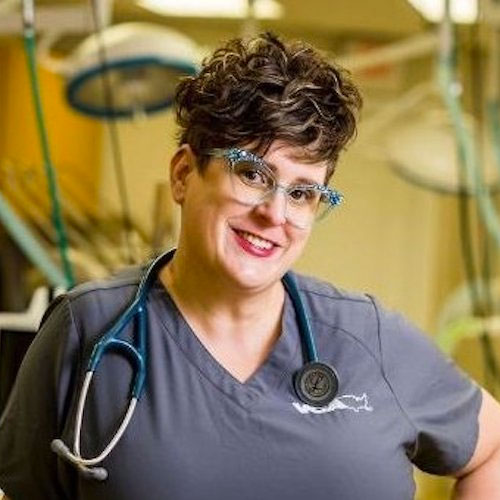
Jessica Wilson-Hess, MS, CVT, VTS
(SAIM)
Jessica is a certified veterinary technician, a veterinary technician specialist (VTS) in small animal internal medicine, and a confirmed nerd. She loves all things veterinary medicine — clinical pathology, nutrition, and caring for critically ill patients (the more IV pumps, the better). Jessica has over 15 years of technician experience. She currently works as a Clinical Evaluation and Education Specialist for Antech Diagnostics. Jessica is passionate about educating technicians and nurses about in-clinic diagnostics, advanced nursing skills, and medical case management. When she isn’t nerding it up at work, she is snuggling her pug, Tank, throwing the frisbee for Ruger, her black Labrador retriever, knitting, talking to her chickens about the meaning of life, and quilting.